
Take the Next Step Home
Stairs are so familiar that our minds can reach the next job before our feet do. Then a wet tread or obstacle changes the arrangement.
A fall can affect your back, knees, wrists or head. Carrying groceries, walking the dog or getting upstairs at home may suddenly require help. Let's keep the stairs as a route, not the reason we're going to urgent care.
See the Steps and Use the Rail
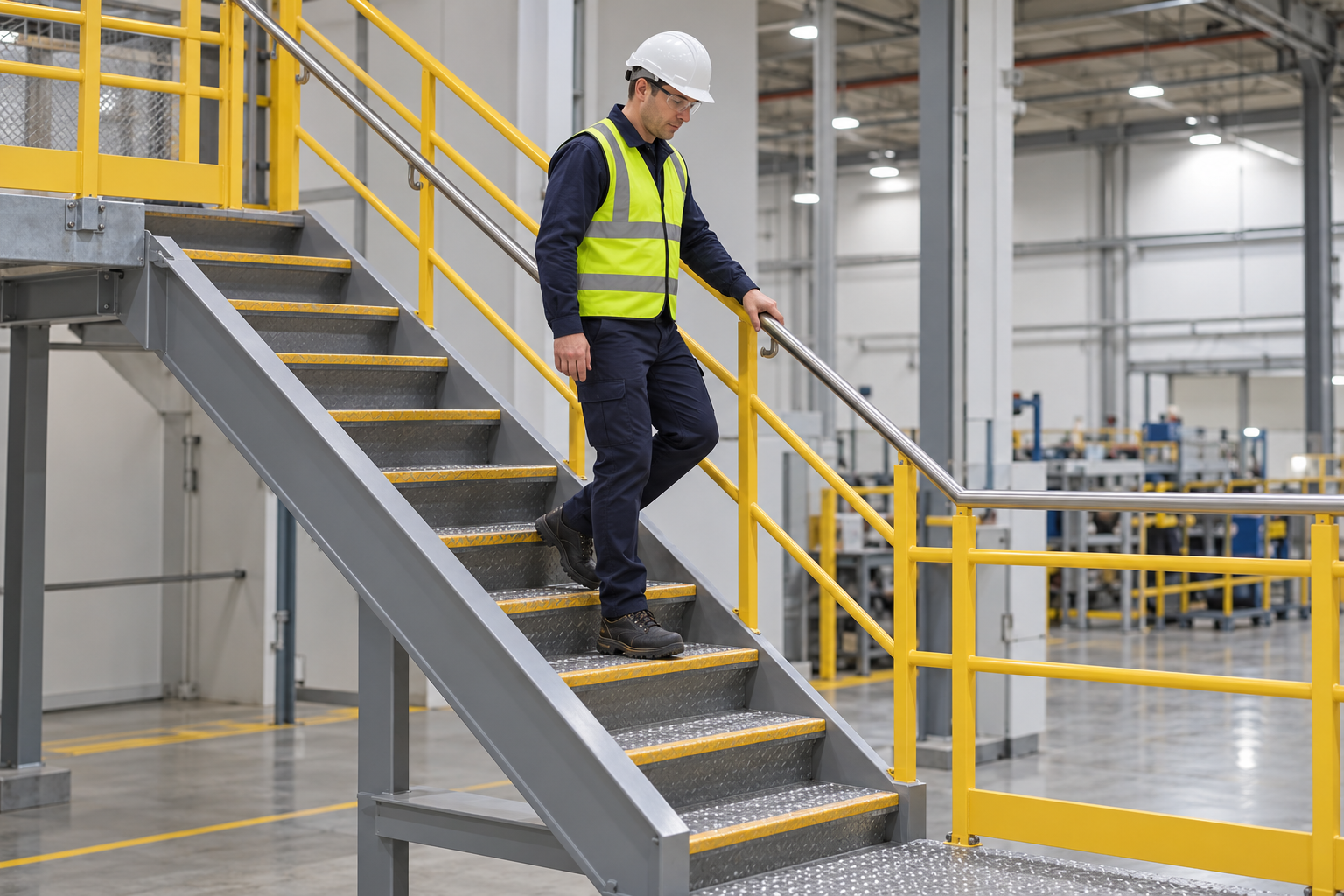
Take a controlled pace. Don't run or skip steps. Put the phone away and pay attention when entering or leaving a flight. There are very few prizes at the top worth a trip to the bottom.
Use the available handrail for a secure grasp and keep a hand free for it. Leaning against an outer rail isn't the same as having a grip. Report missing, loose or unsuitable handrails and arrange safe access.
Keep steps, approaches and landings clear. Watch for spills, damaged surfaces and poor lighting. If you can't see the steps clearly, stop and report it.
Change the Load, Not Your Balance
If a load blocks your view or prevents safe handrail use, change how it moves. Use a suitable approved method, safely reduce the load or arrange help and a planned move. Two people carrying a bulky item doesn't automatically make the stairs safe.
Taking two trips may be the reason you don't need six weeks of help carrying everything else.
You can see the landing but not your next step around a box. What's a better plan than “just go slowly”?
Place it safely and arrange a method that preserves visibility, balance and handrail use. Don't leave it balanced on the stair edge while deciding.
Act on the Condition
Protect people from a spill, damaged tread or faulty rail and report it through the company's process. Use another safe route while it's addressed. Clean only if trained, equipped and authorized for that material and task.
A warning sign doesn't repair a tread. Keep unsafe access restricted as needed until corrected. Don't move a barrier because your destination is close.
Today's Work
Which stairway will we use today? Is it clear, well lit and sound? Name the reporting contact and alternate safe route.
Discussion: Is there a recurring condition we need to fix at its source?
See the steps, use the rail and change a load or route that prevents safe movement.
Personal Close
Keep a hand on the rail and your view of the steps clear, so you can walk through your own front door on your own two feet.